The 21st century is about the expansion of the use of digital technology. These solutions - that increasingly change and simplify many aspects of our daily lives - surround us. Of course, this is no different in the field of dentistry.
Would you like your dental treatments to be more efficient, precise, predictable, safer, and with minimal discomfort? Our digital solutions can help with all of these. Join us and discover how!
Digital Diagnostics
Even more accurate diagnosis in 3 dimensions
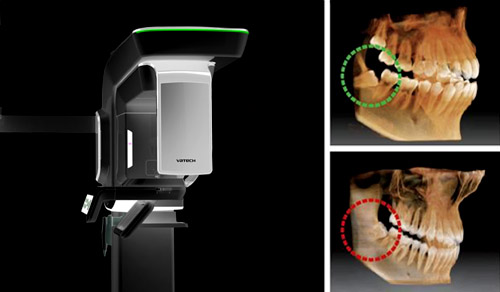
The high-resolution 3D imaging capable Vatech Pax-i 3D Smart CBCT machine takes several hundred images of your teeth in just a few seconds, then creates a three-dimensional model using these images with an extremely low radiation dose, making it suitable even for young children. The accuracy of digital CT imaging is unparalleled, and in addition to aiding in diagnosis, the resulting 3D image is essential in the preparation of any necessary dental prostheses or future treatments.
Digital Data Recording
Our health records and treatment documentation are recorded digitally in our practice.
What is digital data recording? Gone are the days of paper-based records and small print. Our patients fill out the necessary documents and consent forms using the newest iPads. We store these confidential data on a cloud-based server, making them secure and inaccessible to data phishing.
We also communicate with our patients electronically, in addition to phone calls. We send advance notice of upcoming dental treatments for your convenience. One significant advantage of these work processes, in addition to quick data access, is that our paper usage has been minimized, thus also helping the environment.
Digital Impression / Intraoral Scanner
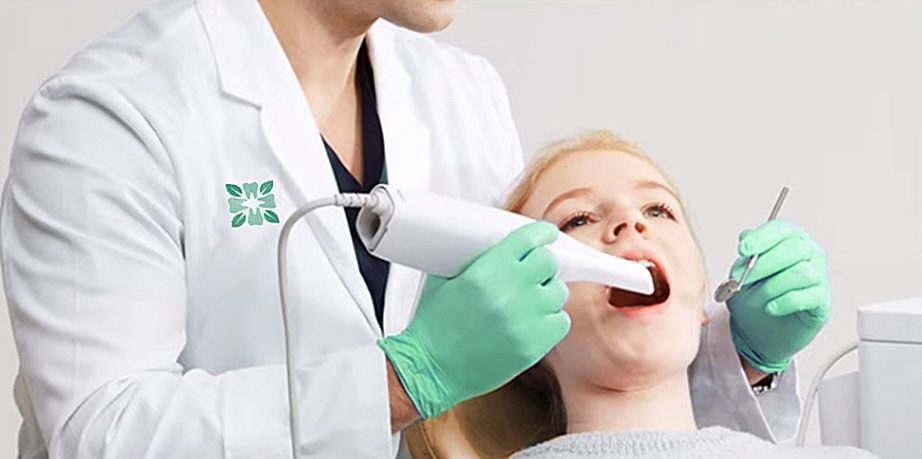
The latest innovation in digital dentistry, the intraoral scanner enables us to replace traditional impression techniques.
During traditional impression-taking, the patient bites into a tray filled with impression material, creating a negative mold of their teeth. The dental technician then pours plaster into this mold to create the dental restoration. This process can cause nausea in some cases, which may deter many from seeking dental treatment.
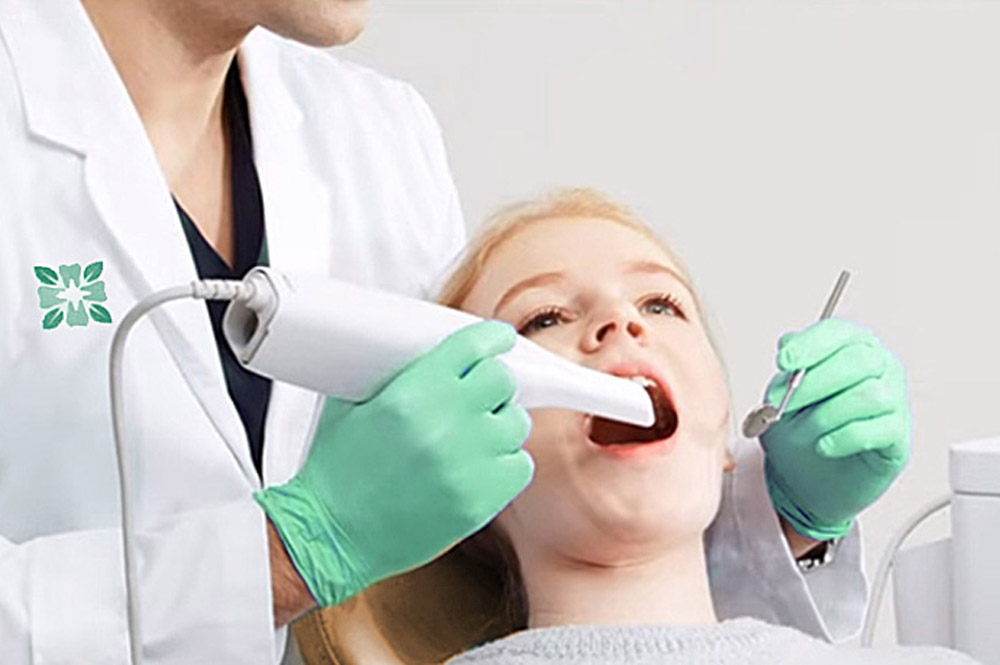
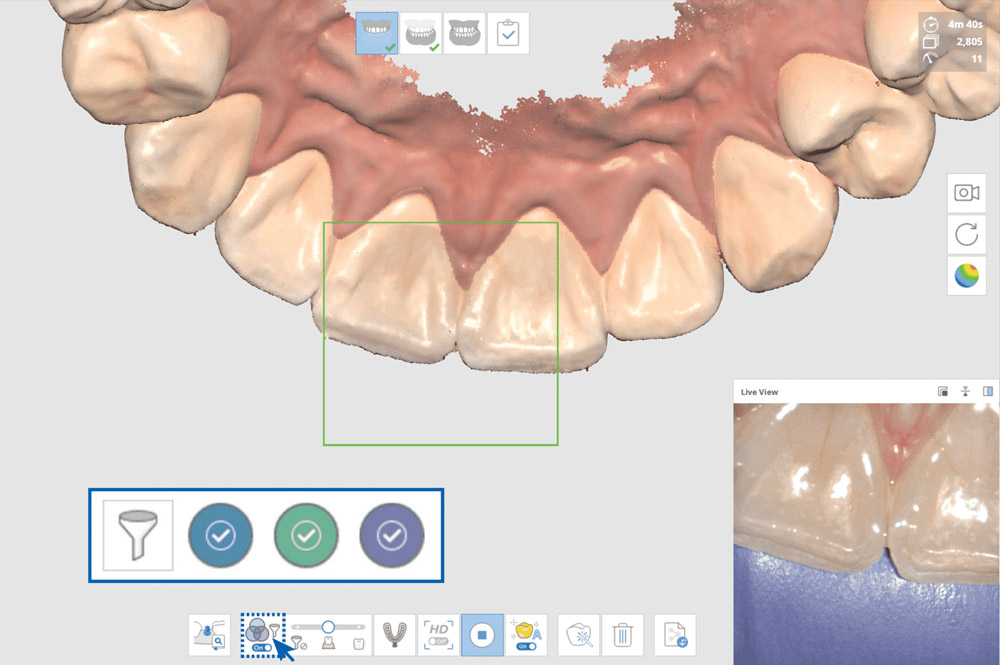
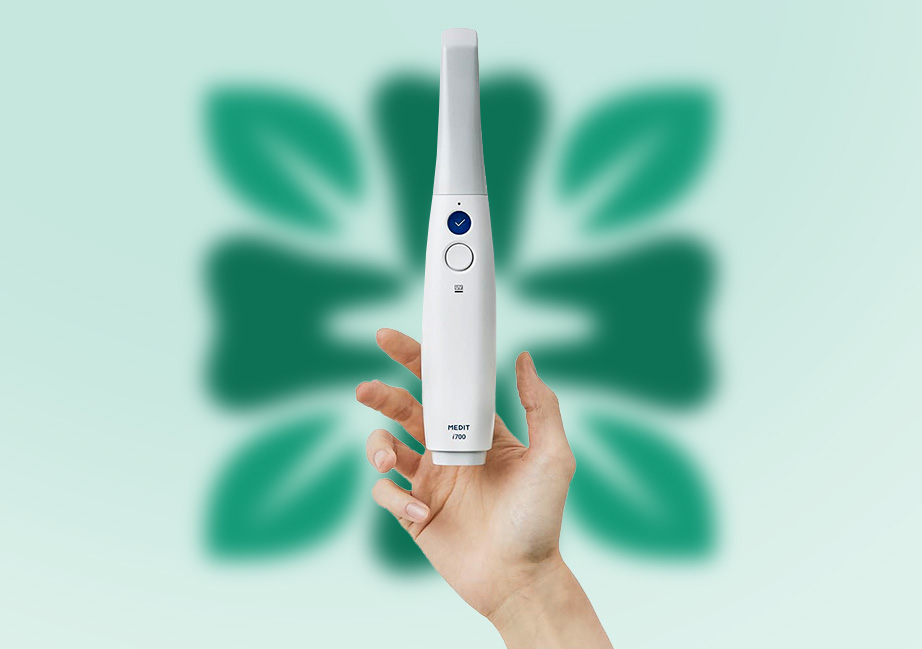
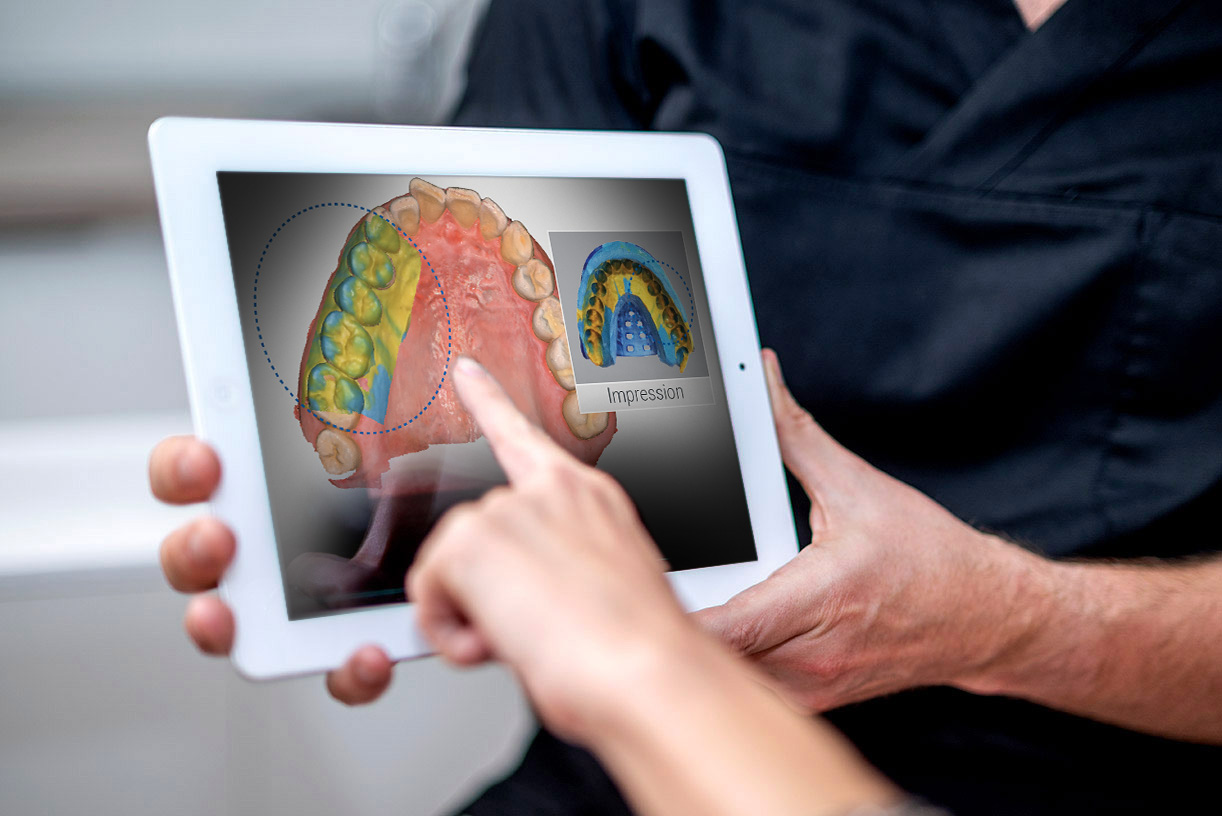
Using an intraoral scanner, there is no discomfort for you. The dentist scans your teeth with this small special digital lidar-based device, and the result immediately appears on a screen. This impression can be rotated, tilted, and checked in all directions.
What are the other advantages of digital impression-taking?
The Medit i700 scanner we use has an accuracy of 11 microns, ensuring a perfect fit of your dental restoration and easy, undetectable wear
We can show you colorful 3D images of your dental problems, making the details of your treatment easier to understand
We keep your digital impressions on servers for years, making them retrievable at any time
Digital Dental Restoration
What do you need to know about the digital technology of designing and manufacturing dental restorations?
The latest dental restorations have been expanded with two important concepts: one is computer-aided design, or CAD for short, and the other is computer-aided manufacturing, or CAM for short.
The process of making a digital dental restoration
Based on the scanned impression, the dental technician designs the restoration on a computer (CAD)
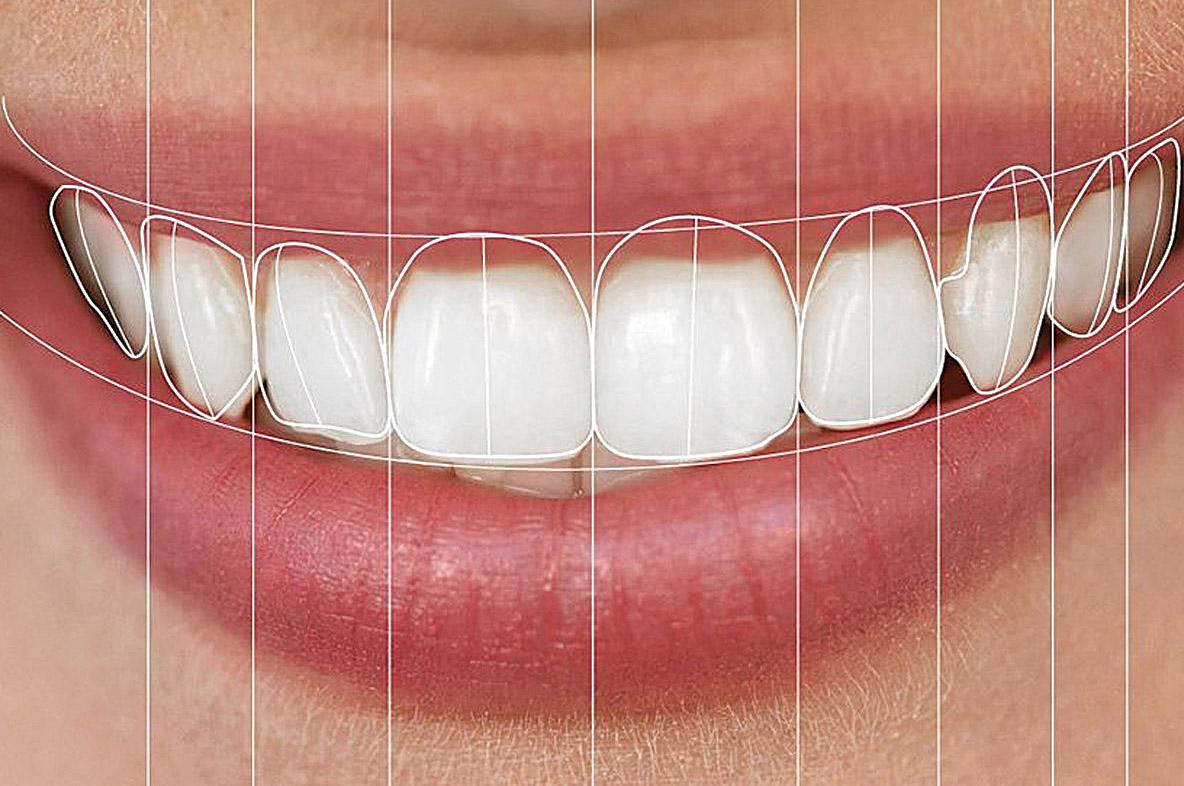
For dental restorations made in the front teeth area, we create a 3D visual plan that allows patients to check that the teeth are harmonious with their face and suit their expectation
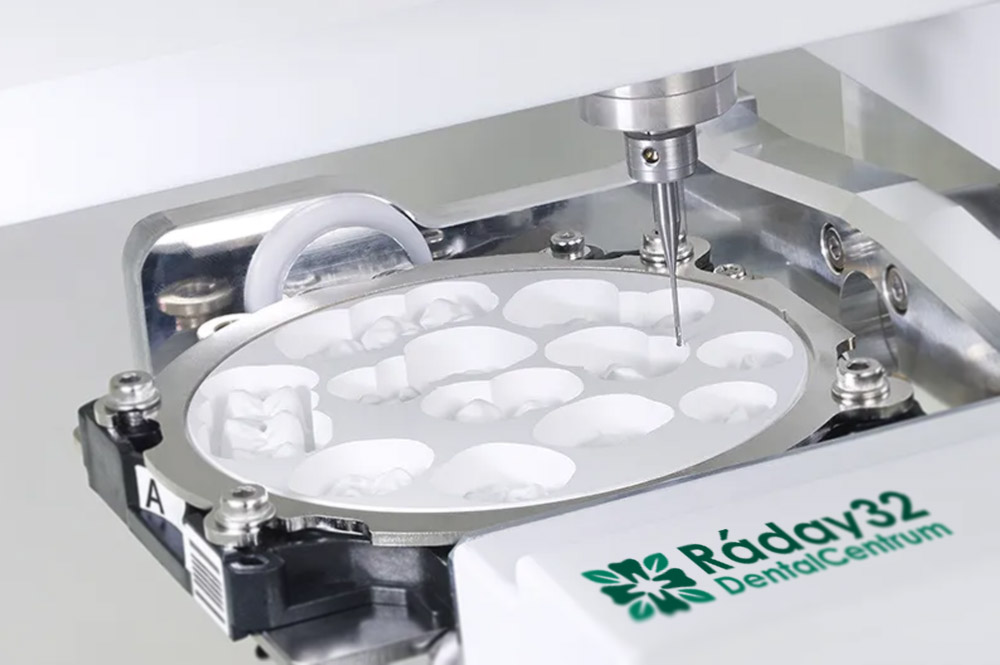
After the digital design, special high-precision milling machines assist in the manufacture and carving of the dental restorations (CAM)
We print a plastic model of the restoration using a 3D printer for verification purposes
3D-Printed Surgical Guide
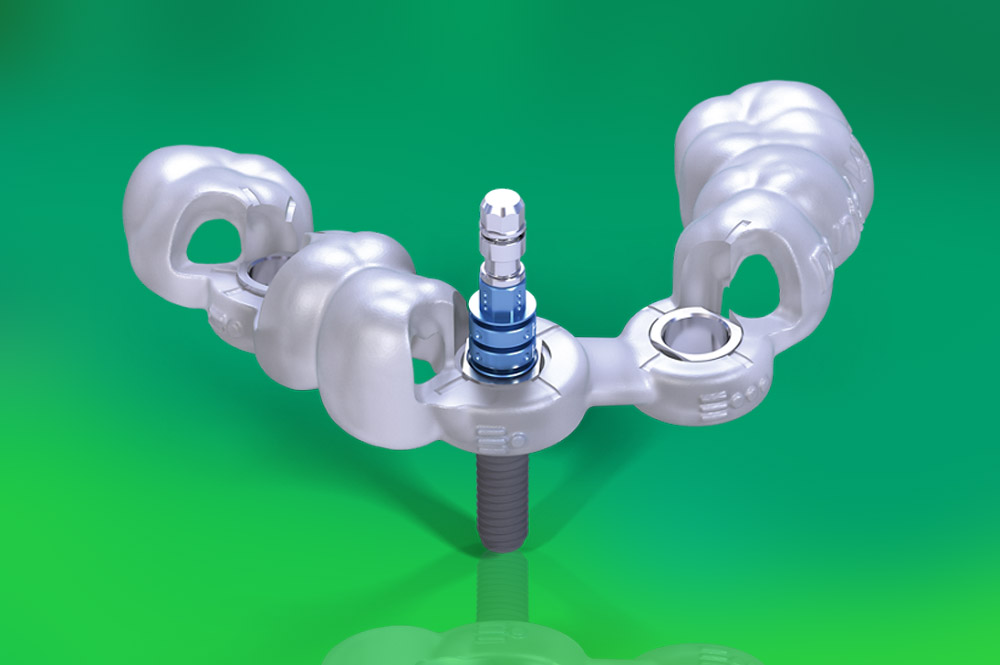
During the placement of dental implants, surgical guide provide great assistance.
First, we take a high-resolution 3D CT scan, followed by a high-precision intraoral digital impression.
With the help of a computer, we combine these two images. Based on this, we design the ideal location for the implants and the aesthetic appearance of the dental prostheses.
Thus, before the placement of the implants, we can model which type of dental prosthesis would be the most suitable for you.
Based on the plans, a 3D-printed surgical guide is created to help the oral surgeon place the implants. With this procedure, surgical time is reduced, and possible risks can be minimized.
Invisible Orthodontics with Digital Impression
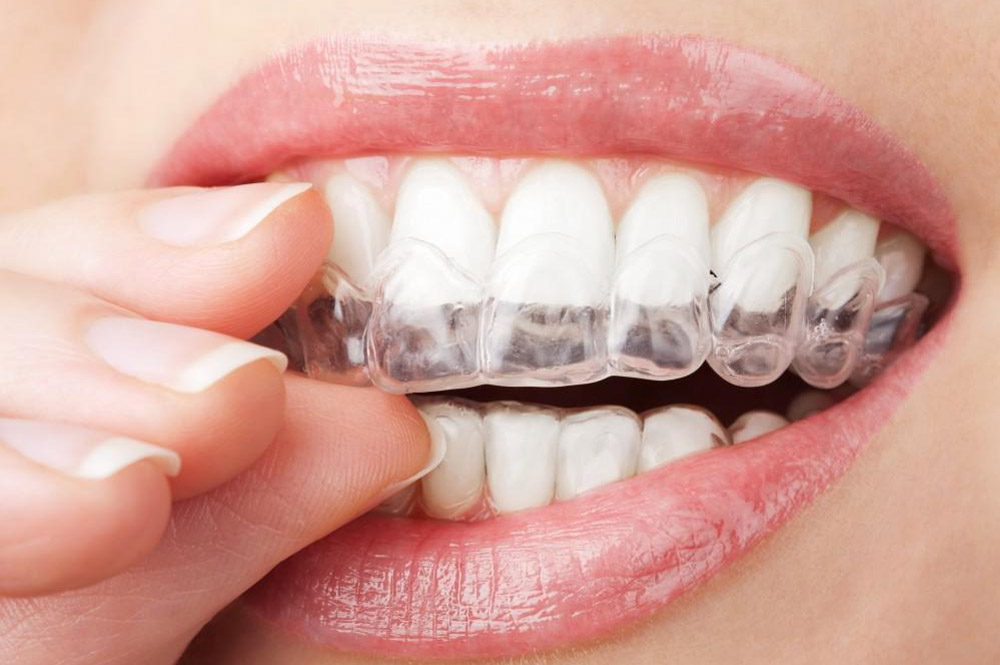
Nowadays, even complex orthodontic treatments can often be performed using invisible aligner trays, avoiding the discomfort associated with fixed braces.
The process of invisible orthodontics step by step
The orthodontic process begins with the preparation of a treatment plan
First, we take a high-precision intraoral scan of the dentition.
Based on this, the lab prepares a digital treatment plan with visualizations and animations, which is always discussed and harmonized with the patient's ideas.
Afterwards, we manufacture the invisible aligners using a 3D printer, which must be replaced every 2 weeks until the desired result is achieved
After completing the treatment, it is recommended to take another intraoral scan within the framework of our Smile Bank service, which allows us to preserve the digital model of the achieved beautiful state.
Smile Bank
Nagy pontosságú lenyomat a digitális technológia segítségével!
Szolgáltatásunk célja, hogy fogainak digitális lenyomatát hosszú távra megőrizzük és későbbi, esetleges fogászati kezelései során segítségül hívjuk. A digitális fogászat legfrissebb innovációja, a digitális intraorális szkenner segítségével a hagyományos lenyomatvételi eljárásokat tudjuk kiváltani.
A hagyományos lenyomatvétel során a páciens a lenyomatanyaggal töltött kanálba harap, ezzel elkészítve a fogai negatív mását. A fogtechnikus ezt a lenyomatot önti ki gipsszel, ami alapján elkészíti a fogpótlást. Ez a lenyomatvételi folyamat sok esetben válthat ki hányingert, ami sokakat tart vissza fogorvosi kezelésektől.
Az intraorális szkenner használatával Önnek nincs semmi kellemetlensége. A kezelőorvos a fogak fölé helyezett speciális, kisméretű kamerával letapogatja a szájüregi képleteket, ami azonnal megjelenik a kijelzőn. Az így elkészített háromdimenziós lenyomat a tér minden irányában forgatható, dönthető és ellenőrizhető.
What are the other advantages of digital impression-taking?
Az álatalunk használt világpiacvezető Medit cég i700 szkennere 11 mikron pontosságú, így a fogpótlása biztosan tökéletesen illeszkedik, ezzel biztosítva a könnyű megszokást, észrevehetetlen viselést.
Színes 3D felvételeken tudjuk megmutatni fogászati problémáját, ezzel érthetőbbé tenni kezelésének részleteit.
Digitális lenyomatait saját tárhelyeinken megőrizzük, ezáltal évekkel később is visszakereshetők.
Milyen esetekben javasoljuk Önnek?
Fogszabályozó kezelés végén, az elért eredmény megőrzése érdekében.
Új fogpótlásának elkészítését követően. Ezzel garantálható egy esetleges sérülést követően az eredetei állapot visszaállítása.
Ha Önnek teljesen egészséges, esztétikus fogazata van, akkor is érdemes ezt az állapotot tárolni. Sosem lehet tudni mikor lesz rá szükség.
A szolgáltatásunk bevezető ára most mindössze 45.000 Ft, mely során az elkészült lenyomatot felhő alapú tárhelyeinken minimum 10 éven keresztül megőrizzük és egy pendrive-on Önnek is átadjuk.
A térbeli lenyomatot a készülék PLY formátumban rögzíti, majd ezt alakítjuk át a 3D nyomtatók számára használható STL formátummá. A felvételt követően a digitális nyomatot mindkét formátumban az Ön rendelkezésére bocsátjuk.